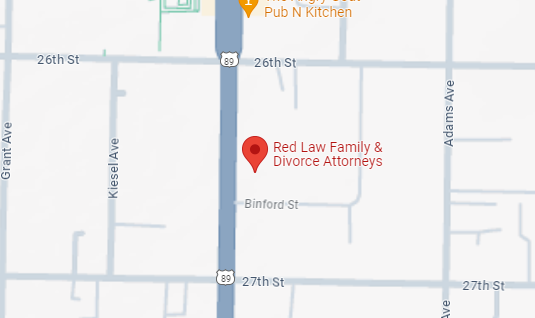
A North Ogden child support lawyer at Red Law Family & Divorce Attorneys can help calculate support, present accurate financial evidence, address parenting time adjustments, and establish, modify, or enforce a Utah support order. Child support disputes touch every part of your child's life, and getting the numbers right matters for your family's future. Our law firm assists parents in North Ogden and surrounding communities in Weber County with the full range of child support issues.
The principal issues in every child support case include parent income, the number of children, custody arrangements, overnight allocation, health care and insurance, uninsured medical expenses, and work-related child care costs. These factors determine what each parent owes, and even small errors in the calculation can change the outcome by hundreds of dollars each month. Call Red Law Family & Divorce Attorneys at (801) 477-0733 to discuss your current situation with a child support lawyer who understands Utah law.
Red Law Family & Divorce Attorneys can help ensure that the support calculation uses accurate information on income, custody, expenses, and parenting time. Our experienced team focuses on Utah family law, including divorce, child custody, child support disputes, modifications, mediation, and family litigation. We provide compassionate guidance during financially stressful disputes and work closely with every client to protect their legal rights and their child's well-being.
Here is how our child support attorneys can assist:
North Ogden family law matters may be handled in the appropriate Weber County court, and our attorneys are familiar with local procedures and expectations. Each client's unique circumstances shape the strategy we build, and we tailor our approach to your specific legal goals. Red Law Family & Divorce Attorneys serves families throughout North Ogden, Ogden, UT, northern Utah, and the surrounding communities.



Child support is a court-ordered financial obligation intended to help meet a child's ongoing needs for housing, food, clothing, education, and health care. It is not a payment to the other parent for personal use; it is intended to support the child financially and ensure that both parents contribute to the child's life. Understanding what child support covers and how it works is one of the first steps in any custody case.
Under Utah Code § 81-6-104, every child is presumed to need parental support, and each parent has a duty to provide it. Support follows the child when physical custody changes as provided by law. The components of a Utah support order include:
Child support and parenting time are separate legal obligations. A parent may not withhold support because the other parent denied visitation. A parent may not withhold parent-time because support is unpaid. Each issue must be addressed through the proper legal process.
Utah uses statutory guidelines and worksheets, depending on the custody arrangement, to calculate child support. The correct amount depends on income, overnights, medical expenses, and child care costs. The sections below explain each component and how they work together in a North Ogden child support case.
Utah calculates base child support using both parents' adjusted gross monthly incomes, the number of supported children, and the applicable statutory table. The calculation follows a structured process that leaves little room for guesswork, but the accuracy of the inputs determines the fairness of the result. Parents who provide incomplete or inaccurate financial information risk an order that does not reflect reality.
Under Utah Code §§ 81-6-202 through 81-6-205, the basic process works like this:
Income sources that may be relevant include wages, salaries, bonuses, commissions, self-employment income, overtime (where applicable), and certain benefits or recurring income. A court may impute income when one parent is voluntarily unemployed or underemployed, subject to statutory requirements. Do not use net take-home pay as the only calculation input; gross income is the starting point under Utah child support Utah law.
The number of overnights and the legal custody arrangement can significantly affect the Utah child support calculation. Different custody arrangements trigger different worksheets, and the difference between sole custody and joint physical custody can meaningfully affect the support amount. Understanding which worksheet applies to your situation is essential for an accurate calculation.
The distinction among the custody types matters:
The correct worksheet depends on which children reside with each parent, how many overnights each parent exercises, and whether the statutory joint custody threshold is met. Actual parenting time practices may become relevant when they differ from the written order. Legal custody, which involves major decisions about education, health care, and religion, is different from physical custody, which determines where the child lives day-to-day. A change in custody may support recalculation, but it does not automatically modify the existing order; parents should obtain a signed modification rather than relying on an informal arrangement.
A Utah support order should address health coverage, uninsured medical costs, and qualifying child care expenses in addition to base support. These costs can add hundreds of dollars per month to the total obligation, and disputes over who pays what are among the most common family law issues in child support cases. Clear documentation protects both parents.
Under Utah Code § 81-6-208, a support order addresses:
Utah Code § 81-6-209 addresses child care expenses associated with employment or qualifying occupational training. Parents must exchange bills, receipts, insurance explanations of benefits, and proof of payment. Reimbursement disputes often involve notice requirements, documentation standards, and payment deadlines. Keeping organized records from the start prevents conflicts later and strengthens your position if the dispute reaches court.
The most important child support factors are accurate income, the number of children, the custody schedule, and legally recognized child-related expenses. Courts apply Utah's guidelines unless a legally supported deviation is justified, and the strength of your financial evidence determines how the court views your case. Understanding these factors helps you prepare and gives your family law attorney the information needed to advocate for a fair outcome.
Key factors the court evaluates:
Courts take credible financial evidence seriously, and your attorney should help you gather and present that evidence in the strongest possible way. Do not hide income, inflate expenses, fail to disclose business revenue, or rely on informal support payments without documentation. The best possible outcome comes from presenting an honest, well-supported case that aligns with Utah's statutory guidelines and protects the child's best interests.
A child's preference does not directly determine child support, but a court-approved change in custody or parenting time may affect the support calculation. Many parents ask at what age a child can choose which parent to live with, and under Utah law, there is no specific age that automatically gives a child the right to select a parent. The court makes custody decisions under the best-interests standard for the child, and a child's preference is one factor among many.
Utah does not set a fixed age at which a child can decide which parent to live with. The court may consider a sufficiently mature child's preference, but the preference alone does not control the outcome. The sequence works like this: the court evaluates custody and parenting time, determines whether a modification is appropriate, and then recalculates child support based on the resulting arrangement.
Parents should not pressure or coach a child to express a preference. Courts and custody evaluators can often identify when a child has been influenced, and that conduct can damage your credibility and your custody case. If your child has expressed a strong preference, discuss it with your family law attorney before raising it in court.

A parent must obtain an approved modification before paying an amount different from the amount required by the existing support order. Informal agreements between parents, even when both sides agree, do not change the legal obligation until the court signs a new order. Utah Code § 81-6-212 governs the modification process, and understanding the requirements before you file can save time and frustration.
Modification may depend on:
Common grounds that may support a modification include:
Modification is generally prospective, meaning it takes effect from the date of filing or the court's order, and it may not erase accrued arrears. Document the changed circumstances and the date they began. Do not rely on a verbal agreement between parents; a signed court order protects both sides and gives you enforcement rights if the other parent falls behind.
Unpaid child support may be enforced through court proceedings, income withholding, and administrative collection measures. Falling behind on support creates legal consequences that can affect your driver's license, tax refunds, and even your freedom. If you are owed support, enforcement tools exist to secure the payments your child needs.
Common enforcement methods include:
The Utah Office of Recovery Services can assist with establishing paternity, enforcing support orders, and collecting past-due payments. Parents should distinguish between current monthly support, past-due support, medical reimbursement, and child care reimbursement, because each may follow a different enforcement path. The paying parent should maintain records of every payment, transfer, receipt, and direct payment made.
Gifts, clothing, or informal purchases do not count toward ordered support unless the court approves a specific arrangement. If the paying parent cannot afford the current amount, they should file a timely modification request rather than stopping payment. Unpaid support does not disappear; it accrues interest and remains enforceable until paid in full.
Child support outcomes depend on the specific facts, income, custody schedule, and expenses in each case. The answers below provide general information about Utah and cannot replace legal assistance based on the details of your situation. Contact Red Law Family & Divorce Attorneys at (801)477-0733 to discuss your case.
Utah considers both parents' adjusted gross incomes, the number of children, and the number of overnights under the applicable custody arrangement when calculating child support using statutory child support tables.
Parents may propose an arrangement, but the court must ensure that any support order complies with Utah law and protects the child's interests and well-being.
No. Joint custody can affect the calculation, but differences in income and overnights may still result in one parent paying support to the other.
Utah does not set an automatic choice age. A mature child's preference may be considered, but the judge makes custody decisions according to the child's best interests.
No. A child does not select the support recipient. The court determines support based on the governing custody arrangement and the statutory calculation.
Yes. A court-approved change in custody or overnight visitation may justify recalculating support, but the existing amount remains enforceable until formally modified by the court.
Generally, no. Support and parenting time are separate obligations, and each issue should be resolved through the proper legal process rather than self-help.

Our North Ogden child support lawyer at Red Law Family & Divorce Attorneys can review your current order, finances, and parenting schedule to establish, modify, or enforce support. Our legal team handles child custody cases, divorce proceedings, parental rights, and custody issues across Salt Lake City, Cottonwood Heights, and from our Ogden office, also covering spousal support, alimony, and probate. Bring recent tax returns, pay stubs, health insurance statements, childcare receipts, and payment histories. We offer full family law services and fight for fair outcomes that protect your loved ones. Call (801)477-0733 for a free consultation.
"*" indicates required fields


Aggressive Representation: Our aggressive approach in the courtroom and in negotiations ensures that we obtain the best possible outcomes in every case.
"*" indicates required fields