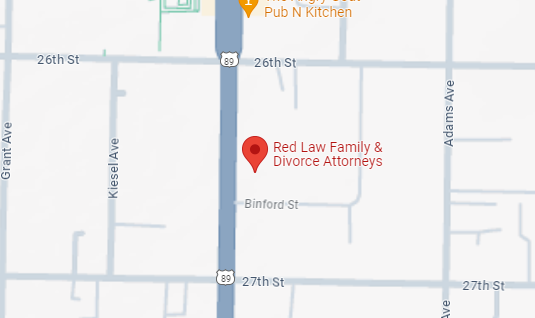
A North Ogden divorce lawyer helps you end a marriage while protecting your rights. People in Weber County must comply with state laws to ensure their divorce decree is fair. Picking the right legal support helps you manage child custody and property division with confidence. Red Law Family & Divorce Attorneys focuses on these cases to help Utah families reach a good result.
Ending a marriage is a big change that requires legal and emotional support. If you live in North Ogden, your case will likely be heard in the Second District Court in Ogden, Utah. Having a lawyer who knows the local court and judges can make a big difference.
The legal process for family law matters has many steps that can be hard to navigate without help. Our firm provides the legal representation needed to handle family law disputes with care. We focus on clear talk so you understand every part of your case as it moves forward.
Working with a local attorney means you have an advocate who knows the needs of Utah families. Whether you face a collaborative divorce or a hard trial, we stand by you. Our goal is to help you start your next chapter with peace of mind.
Living in North Ogden means following the specific rules set by the Utah Legislature. These laws decide how you start your case and what you must prove to the court. Knowing these rules helps you navigate the legal process without costly mistakes.
To file for divorce in Weber County, you or your spouse must have lived in the county for at least 90 days. This rule comes from Utah Code § 81-4-402(1) and ensures the local court has the power to hear your case. You also need to state a legal reason, or ground, for the split under Utah Code § 81-4-405. Most families in North Ogden choose irreconcilable differences because it does not require proving that either party did anything wrong.
The divorce process begins when one spouse files a petition at the Second District Court in Ogden. After filing, the other spouse must be served with legal papers and has 21 days to respond if they live in Utah. Parties must then share financial information and attend a mandatory 30-day waiting period under Utah Code § 81-4-402(3). If parents cannot agree on terms, they usually attend mediation to resolve family law disputes before going to a judge.
Some couples in North Ogden prefer a legal separation instead of ending the marriage completely. Under Utah Code § 81-4-104, you can ask the court for a temporary separation order to handle money and children while living apart. This order is valid for one year and allows you to retain certain benefits, such as shared health insurance. It is a helpful tool for those who need space but are not yet ready for a final divorce decree.


Addressing the core issues of a divorce requires a clear focus on both your children and your financial security. Utah law provides a specific framework to ensure that these matters are handled fairly for everyone involved. By understanding the rules for custody, support, and property, you can better prepare for the road ahead.
In Utah, all custody decisions are based on the best interests of the child under Utah Code § 81-9-204. The court looks at which parent can best meet the child's daily physical and emotional needs. There is a legal presumption that joint legal custody is best for the child, meaning both parents share major decisions (Utah Code § 81-9-205). However, this does not always mean a 50/50 split of time, as the court may designate one home as the primary residence to maintain stability.
Both parents have a legal duty to support their children financially after a split. Utah uses a precise formula, the Income Shares Model, to set child support amounts under Utah Code § 81-6-302. This calculation looks at both parents' gross monthly incomes and the number of overnights the child spends in each home. If a parent fails to pay, the court can issue court orders for wage garnishment or other enforcement actions to ensure the child's needs are met.
The court may award spousal support to help a lower-earning spouse maintain a lifestyle similar to what they had during the marriage. Under Utah Code § 81-4-502, judges consider factors like the length of the marriage and each person's earning capacity. Unlike child support, there is no set formula for alimony, making the skill of your lawyer vital in these negotiations. Generally, alimony cannot last longer than the length of the marriage.
Utah follows the equitable division rule for all marital property acquired during the marriage. As explained in Utah Code § 81-4-406, equitable means fair, but not always a perfect 50/50 split. The court identifies all assets, including retirement accounts, real property, and personal property, before deciding on a fair distribution. Separate property, such as a gift or an inheritance, kept in one person's name usually stays with the original owner.
| Legal Issue | Governing Utah Statute | Key Decision Factor |
| Child Custody | Utah Code § 81-9-204 | Best Interests of the Child |
| Child Support | Utah Code § 81-6-302 | Income Shares Model |
| Spousal Support | Utah Code § 81-4-502 | Standard of Living & Need |
| Property Division | Utah Code § 81-4-406 | Equitable (Fair) Distribution |
Successfully resolving these issues sets the foundation for your life after the divorce is final. Whether you reach an agreement through mediation and negotiation or go to trial, these statutes govern the outcome. Protecting your family's future means ensuring every detail of these core issues is addressed correctly.

Choosing how to handle your divorce is a major decision that affects your timeline and cost. Most families in North Ogden prefer to avoid a courtroom to keep things private and calm. However, the best method depends on how well you and your spouse can communicate and agree on the future.
Mediation and negotiation are processes where a neutral person helps you and your spouse reach an agreement. Under Utah Code § 81-4-403, if you have contested issues, you must attend at least one mediation session in good faith. This is often the best way to settle family law disputes without a judge making the final call. It allows you to create a custom plan for your family while keeping your court records more private.
A collaborative divorce is a newer way for Utah families to resolve their split without going to court. In this process, both spouses and their divorce lawyers sign a contract promising to settle all issues through meetings. You may also work with experts like financial planners or custody evaluators to find fair solutions. If the process fails and you must go to court, both lawyers must resign, which encourages everyone to stay at the table.
Litigation is the process of taking your case to trial at the Second District Court in Ogden, Utah. This path is usually reserved for cases involving high conflict, complex marital property, or safety concerns. During legal proceedings, a judge will review evidence and listen to testimony before issuing court orders. While this is often the most expensive path, it is sometimes necessary to protect your rights and ensure a fair divorce decree.
A final divorce decree marks the end of your marriage, but it is often the start of a new legal relationship. As your life changes over the years, the court orders may no longer fit your needs. Knowing how to update or enforce these rules is vital for keeping your family stable and secure.
Life moves fast, and a court order that worked two years ago might not work today. Under Utah Code § 81-9-208, you can ask the court to change custody or parent-time if there is a "substantial and material change in circumstances." This might happen if a parent moves away, changes jobs, or if a child’s needs change as they grow. To succeed, you must prove to the judge that the new plan is in the best interest of your child.
When a former spouse refuses to follow a court order, you have the right to seek help from the legal system. You can file a Motion to Enforce Order to ask the judge to make the other person comply with the rules for child support or visitation. Under Utah Code § 81-4-204(2), the court may use contempt proceedings or property sales to enforce the decree. Red Law Family & Divorce Attorneys helps clients hold the other party accountable to ensure their rights remain protected.
| Type of Action | Legal Requirement | Common Reason |
| Modification | Substantial change in life | Job loss or a major move. |
| Enforcement | Proof of a violated order | Missed child support payments. |
| Termination | Specific legal trigger | Remarriage ending alimony. |
Managing your life after a divorce requires staying on top of these legal details. Whether you need to adjust a schedule or collect unpaid support, the Utah Code provides a path for relief. Working with a lawyer ensures that these post-divorce matters are handled quickly and correctly in the Weber County courts.
Selecting the right attorney is the most important choice you will make for your family's future. You need a professional who combines deep legal knowledge with a clear understanding of the North Ogden community. The right lawyer will protect your assets and your children while keeping the process moving forward.
When you search for divorce lawyers, look for someone who focuses on family law matters and has experience in local court procedures. A good lawyer should be skilled in both mediation and negotiation, as well as in high-stakes civil litigation. They should also have a clear fee structure and a team that responds quickly to your questions. Finding someone who makes you feel heard and respected is vital during such a personal and stressful time.
Red Law Family & Divorce Attorneys provides the legal support that Utah families deserve during a split. Our team understands how to resolve child custody disputes and complex asset division with care and precision. We focus on reaching a fair divorce decree that allows you to move forward with financial and emotional stability. By choosing our firm, you gain an advocate dedicated to protecting your rights at every step of the legal process.
Accordion ConA divorce in Ogden takes at least 30 days due to the state waiting period. Contested cases involving children or property often take several months or longer to finish.
Utah courts decide custody based on the child's best interests. Judges look at parent-child bonds, the ability to provide stability, and any history of abuse or substance use.
Alimony is based on the financial need of one spouse and the other's ability to pay. The court also considers the length of the marriage and the standard of living.
Yes, you can change orders for custody or support if there is a major life change. You must prove to the court that the change is necessary and fair.
You or your spouse must live in a Utah county for at least 90 days before filing. This rule is found in Utah Code Section 81-4-402.
Most divorce records in Utah are private to protect the family's personal information. However, the final orders and the divorce decree are usually available to the public.
Taking the first step toward a divorce is never easy, but you do not have to do it alone. Professional legal assistance can turn a confusing process into a clear plan for your new life. Our firm is ready to help you manage every detail, from filing the initial petition to the final signing of your papers.
At Red Law Family & Divorce Attorneys, we provide the legal representation you need to protect your family and your future. Whether you are dealing with paternity issues, child support, or marital property splits, we have the skills and experience to help. Our goal is to resolve your family law case with as little stress as possible.
We serve clients throughout North Ogden and the surrounding areas with dedicated and focused care. Do not leave your future to chance or wait until a small problem becomes a major crisis. Reach out to our team today to discuss your case and learn how we can support you.
"*" indicates required fields


Aggressive Representation: Our aggressive approach in the courtroom and in negotiations ensures that we obtain the best possible outcomes in every case.
"*" indicates required fields