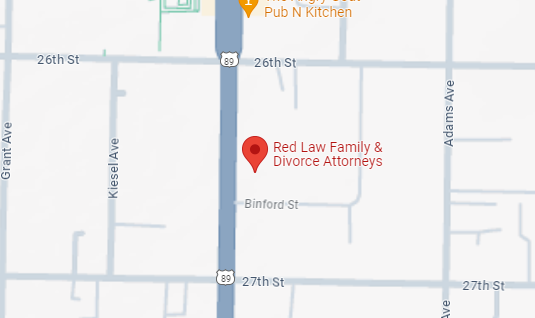
A North Ogden family litigation lawyer manages courtroom disputes involving divorce, child custody disagreements, and asset division. This type of legal action involves filing formal motions, collecting financial records, and presenting evidence from witnesses before a state judge. If you face an active courtroom dispute in Weber County, contact Red Law Family & Divorce Attorneys at (801)-477-0733 to review your case and protect your parental rights.
Choosing the right legal advocate changes the trajectory of your domestic relations courtroom case. Our firm prioritizes direct trial advocacy to protect your household stability and personal assets. We understand the emotional strain of public court battles and fight hard for your family's future.
Red Law Family & Divorce Attorneys brings years of focused courtroom experience to every local domestic relations dispute. Our trial team prepared the single bulleted list below to showcase the clear pillars of our trial practice:
A successful trial track record depends on careful preparation and deep knowledge of state evidentiary procedures. Trusting an unproven team can result in the loss of custody rights or unfavorable property splits. Red Law Family & Divorce Attorneys provides the strategic counsel you need to approach the judge with complete confidence.
Family litigation refers to the formal legal process of resolving domestic disputes inside a state courtroom. When parents or spouses cannot reach a mutual agreement through private mediation, a judge must step in. This formal process converts your personal dispute into an official civil lawsuit subject to strict court procedures.
Litigation covers several domestic topics, including contested divorces, emergency protective orders, and intense child custody disputes. Each party presents arguments, submits written documentation, and cross-examines witnesses to support their claims. Red Law Family & Divorce Attorneys can manage your litigation strategy to ensure your voice is heard clearly by the court.
Courtroom litigation represents the most formal method available to finalize high-conflict family law disputes. This path requires strict compliance with state civil codes to avoid serious legal disadvantages at trial. Red Law Family & Divorce Attorneys prepares every element of your petition to ensure you achieve a stable resolution before the judge.



A formal family dispute requires following the precise judicial pathways established by the state court system. When private negotiations break down, your domestic relations case must proceed directly through local court channels. Understanding the structural progression of a lawsuit helps you protect your personal interests and manage daily stability during active trials.
Every contested domestic relations case begins when one party files a formal initial petition with the district courts. Under the Utah Rules of Civil Procedure, this original document must be hand-delivered to the responding spouse through an official service of process. The receiving individual must submit a written answer within 21 days to avoid facing an immediate default judgment. If the respondent fails to participate, the filing parent can secure a final judgment that grants all of their requested terms.
The discovery phase serves as a mandatory information-exchange window designed to ensure absolute financial transparency between spouses. According to URCP Rule 26, domestic relations actions include strict limits on standard fact discovery to keep the legal process proportional. Both parties must submit detailed financial declarations alongside tax returns, insurance coverage contracts, and verified employee pay stubs. If an individual attempts to hide separate marital assets, the court can issue evidentiary sanctions or award financial penalties.
Because an active domestic relations trial frequently lasts for several months, families need intermediate rules to handle daily disruptions. Either party may file a motion for a temporary order to establish clear operational boundaries while the lawsuit remains pending. Under Utah Code § 81-4-402, judges utilize these short-term hearings to allocate temporary child support, assign house possession, and enforce basic parenting time matrices. These interim orders remain fully binding until the judge signs your final divorce decree at the end of the trial.
When mediation attempts fail, your legal professional must assemble the definitive evidentiary foundation needed to prevail in a courtroom trial. This rigorous assembly phase shifts your domestic argument into a formal presentation centered entirely on verifiable facts. Our trial attorneys utilize the numbered list below to complete your final trial readiness checklist:
Following the correct procedural steps ensures your courtroom arguments remain fully enforceable under current Utah law. Missing a single filing deadline or submitting an incomplete financial declaration can compromise your credibility before the judge. Red Law Family & Divorce Attorneys manages every phase of your civil litigation process to ensure your rights are protected during a trial.
Judges evaluate specific baseline criteria to resolve highly contested domestic relations lawsuits in Utah. Courtrooms prioritize objective evidence over personal accusations when making final rulings about your household stability. Understanding these core legal components allows you to gather the proper documentation before your formal trial begins.
Every successful courtroom strategy centers on financial transparency, stability, and child safety metrics. State laws require a thorough analysis of parental behaviors, household income records, and local educational arrangements. Red Law Family & Divorce Attorneys can help you identify and organize these vital facts to build a persuasive case.
Identifying the primary factors that influence a judge's final decision keeps your trial preparation on track. Focusing on emotional arguments rather than verifiable statutory elements will weaken your standing in the courtroom system. Red Law Family & Divorce Attorneys evaluates your specific case details to highlight the factors local courts value most.
Utah judges place the emotional and physical welfare of minor children above all other conflicting parental demands. Under the newly restructured family statutes, the court evaluates specific home safety and stability metrics to rule on joint or sole arrangements. Preparing historical evidence of your daily involvement helps ensure the final ruling reflects your child's long-term developmental needs.
A valid custody agreement must include a detailed parenting plan that explicitly outlines residential schedules, holiday splits, and decision-making structures. According to Utah Code § 81-9-205, there is a strong rebuttable presumption that joint legal custody serves the child's best interest. This mandatory document must also define a clear dispute-resolution process to help parents settle future disagreements outside the civil court system.
When a household involves domestic violence or neglect, the court implements immediate safeguards to isolate vulnerable family members from harm. Judges review existing civil protective orders and partner with local victim advocates to establish supervised parent-time conditions. Under Utah Code § 81-9-206, the court must make specific factual findings regarding any history of abuse before granting visitation privileges.
During high-conflict custody disputes, the court may involve the Division of Child and Family Services to conduct neutral safety assessments. DCFS caseworkers investigate active allegations of abuse, interview minor children in private, and submit formal evaluations directly to the judge. The court system treats these state-backed agency reports as authoritative evidence when deciding whether to restrict a parent's basic visitation rights.
Sometimes a natural parent faces profound personal challenges, such as severe substance dependency or extended incarceration, that prevent them from providing adequate home care. In these extreme situations, grandparents or close relatives can work with a guardianship attorney to secure legal custody rights. Utah courts require third-party petitioners to present clear and convincing evidence that a parental custody transfer is necessary to preserve the child's safety.
Protecting your parental rights requires a strategic approach that addresses the exact safety factors valued by state judges. Relying on loose, informal arrangements rather than a formal court order can lead to unexpected custody disruptions later. Red Law Family & Divorce Attorneys provides the compassionate advocacy required to secure structured parenting plans that keep your children completely safe.


High-value asset distribution requires strict financial transparency and careful compilation of evidence during a courtroom trial. State judges scrutinize household investments, corporate holdings, and accumulated liabilities to divide your shared marital estate fairly. Establishing clear documentation of your separate property interests protects your personal financial stability after the final judgment.
Marital homes, vacation properties, and commercial real estate represent major points of contention during family law trials. Under Utah Code § 30-3-5, the court divides all real estate acquired during the marriage using equitable distribution rules. Judges analyze who paid the mortgage, structural maintenance costs, and original down payments when assigning property titles. If a property involves pre-marital equity, your legal professional must present historical deeds to shield those funds from distribution.
When a spouse owns a business, the courtroom must establish the precise market value of that enterprise. Forensic accountants perform detailed audits of company bank accounts, corporate tax filings, and outstanding merchant debts. Our firm uses the data table below to track common business valuation methods used during the trial preparation process:
| Valuation Approach | Primary Focus Area | Legal Application in Court |
| Asset-Based Approach | Net tangible asset values | Useful for asset-heavy entities or liquidation |
| Market Approach | Recent sales of similar firms | Provides baseline fair market value data |
| Income Approach | Historical revenue projections | Evaluates the future earning capacity of the owner |
Workplace retirement benefits, pension plans, and 401 (k) accounts accumulated during a marriage count as shared marital assets. A judge cannot split these regulated funds without a specific, separate administrative document called a qualified domestic relations order. This specialized court directive instructs corporate plan managers to divide retirement assets without triggering early-withdrawal tax penalties. Your attorney must draft this order precisely to ensure corporate administrators accept the split terms.
When a former partner refuses to pay court-ordered child support or skips mandatory debt payments, immediate legal intervention is necessary. You can file an official motion for an order to show cause to bring the non-compliant individual back before the judge. The court system enforces these existing financial obligations by issuing steep monetary fines, suspending professional licenses, or ordering wage garnishments.
Managing complex financial trials requires analyzing detailed transaction histories and securing authoritative expert valuations. Overlooking hidden accounts or miscalculating corporate equity can cause severe, permanent financial damage to your separate estate. Red Law Family & Divorce Attorneys builds strategic financial cases to ensure your hard-earned assets remain completely protected.
Life situations frequently shift long after a district court judge signs your final trial paperwork. When major employment changes or household safety adjustments occur, your existing court orders must be updated to reflect those changes. Returning to the courtroom via post-judgment petitions ensures your legal responsibilities remain fair and enforceable under state law.
A parent can request a formal modification of child custody or monthly support amounts when financial or domestic shifts occur. Under Utah Code § 81-9-208, the filing party must prove that a substantial and permanent change in circumstances has taken place since the trial ended. Common examples include a major geographic relocation, a significant job loss, or a child developing advanced medical needs. The local court system reviews these update petitions to guarantee the revised arrangements continue to preserve the child's welfare.
When a former partner intentionally ignores a signed decree, filing a motion for contempt enforces compliance. This legal process requires you to show the judge that the opposing party understood the rules but willfully disobeyed them. Under Utah Code § 78B-6-310, individuals found in contempt face specific penalties, including mandatory attorney fee reimbursements, monetary fines, or jail time. This structural enforcement pathway provides the necessary leverage to collect unpaid support or correct visitation schedule violations.
If a trial judge makes a clear legal mistake or misapplies state statutes during your case, you can pursue an appeal. You must file a formal notice of appeal with the clerk within 30 days of the final judgment date to preserve your rights. The Utah Court of Appeals reviews the transcripts and legal briefs from your original trial rather than hosting a brand-new trial. This complex review process focuses entirely on uncovering procedural errors or incorrect applications of statutory law.
Managing post-judgment changes demands careful legal timing and an organized presentation of fresh evidence before the court. Relying on casual verbal agreements with a former spouse will not protect you if disputes arise later. Red Law Family & Divorce Attorneys can manage your modification petitions, contempt filings, or appeal procedures to keep your rights fully secure.
What is the difference between family law mediation and litigation?
Mediation involves a neutral third party helping spouses reach a voluntary agreement outside of court. Litigation means a judge hears evidence and makes final, binding decisions under formal court rules.
How long does a family litigation case take in Utah?
Contested cases usually take six to eighteen months, depending on court backlogs and complexity. Simple disputes resolve faster, while high-value asset battles require extensive trial preparation and discovery timelines.
Can I change my child custody order after the trial ends?
Yes, you can file a petition to modify your custody order if circumstances change significantly. The financial or domestic change must be permanent and impact the child's best interests.
What evidence is most important in a child custody dispute?
Judges prioritize documented facts over personal accusations during a custody trial. School records, police reports, therapist evaluations, and text messages provide the reliable evidence needed to establish stability.
Will I have to testify in front of a judge?
Yes, most contested family lawsuits require both parties to give oral testimony under oath. Your attorney will prepare you for direct questioning and cross-examination before the trial begins.
Can a judge order my spouse to pay my attorney fees?
Yes, Utah courts can order one spouse to pay legal fees based on financial need. The judge evaluates each person's income and assets to ensure both parties have access to justice.

Securing dedicated representation protects your parental rights and marital assets during difficult courtroom trials. A single adverse ruling can permanently impact your access to your children and lower your post-divorce net worth. Working with local advocates ensures you comply with deadlines and present the strongest possible evidentiary case.
Our trial attorneys know how local judges rule on property valuation and high-conflict custody plans. Red Law Family & Divorce Attorneys can manage your entire legal strategy so you can focus on rebuilding your home life. We aggressively protect your financial safety and parental interests inside the Weber County civil justice system.
Taking fast action prevents your spouse from gaining an unfair advantage during the initial pleading stages. Postponing your legal defense or missing discovery deadlines can result in an immediate and costly default court judgment. Call us at (801)-477-0733 to schedule a free consultation with a North Ogden family litigation lawyer today.
"*" indicates required fields


Aggressive Representation: Our aggressive approach in the courtroom and in negotiations ensures that we obtain the best possible outcomes in every case.
"*" indicates required fields