Learn how legal custody works in Utah, who decides it, and how to protect your right to raise your child. Red Law Family & Divorce Attorneys helps North Ogden parents. Call (801) 477-0733 today.
Deciding who controls the big choices in your child's life is frightening. You may feel overwhelmed, unsure of your rights, and afraid of being pushed to the sidelines. Our North Ogden legal custody lawyers at Red Law Family & Divorce Attorneys understand that fear, and we help parents protect their place in a child's life.
Legal custody is about decision-making power over school, health care, and religion, not just where your child sleeps at night. We explain your options in plain language, then build a clear strategy for your situation. If you are facing a custody decision in North Ogden or anywhere in Weber County, call (801) 477-0733 for a free case evaluation.
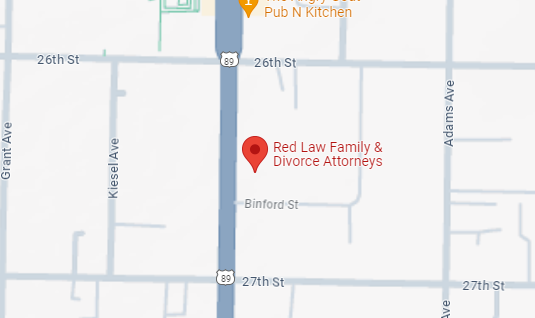
Our main office sits on North 400 East in North Ogden, minutes from the courthouse where your case will likely be heard. That location matters. We know the local judges, commissioners, and mediators who shape custody outcomes in this area.
Family law is our focus, and our team brings more than 12 years of experience to custody, divorce, and paternity matters. Every case gets a real strategy, not a form response.
We also believe strong representation should stay within reach. Red Law offers flexible payment plans and a reasonable retainer, so cost does not force you to face a custody dispute alone. Throughout your case, we favor calm, composed advocacy that keeps the focus on your child while we push hard for your rights.
Many parents use the word custody as if it means one thing. In Utah, it means two. Legal custody is the authority to make major decisions for your child. Physical custody is where your child lives and how parenting time is divided.
You can share one type and not the other. A parent may hold joint legal custody yet have less physical parenting time, or the reverse. Understanding the difference is the starting point for protecting what matters most to you.
| Legal Custody | Physical Custody |
|---|---|
| The right to make major decisions for your child | Where your child lives day to day |
| Covers education, health care, and religious upbringing | Covers the parenting-time schedule and daily care |
| Can be joint (shared) or sole (one parent) | Can be joint or primary with one parent |
| Focuses on decision-making authority | Focuses on residence and time with each parent |
Legal custody itself comes in two forms:
Joint legal custody works best when parents can communicate and cooperate. Sole legal custody may fit when one parent cannot safely or reliably take part in decisions. Our attorneys help you pursue the arrangement that fits your family and your child's needs.



Utah courts decide custody using one guiding standard: The best interest of the child. A judge weighs many factors before signing any order, and no single factor controls the result.
Under Utah Code Section 81-9-204, courts consider each parent's conduct and moral character, the bond between parent and child, and each parent's willingness to support the child's relationship with the other parent. Judges also look closely at any history of abuse or neglect. The court may consider an older child's preference, giving added weight to the wishes of a child who is 14 or older, though that preference does not decide the case.
Utah law also favors shared decision-making in many families. The state applies a presumption of joint legal custody in appropriate cases. A parent who wants sole legal custody must show why shared authority would not serve the child, such as evidence of abuse, a large distance between homes, or an inability to cooperate.
These rules can feel abstract when your family is on the line. Our team translates them into a focused plan and presents the facts that matter to a Utah judge.
We represent North Ogden parents across the full range of legal custody issues. Below are common matters our attorneys handle.
When a marriage ends, or paternity is established, the court sets legal custody for the first time. We help you present a strong case for the decision-making role you want and protect your rights from the start.
Many parents want a real say in their child's schooling, health care, and upbringing. We build the record that supports joint legal custody and craft a workable plan for how you and the other parent will share major decisions.
Sometimes shared decision-making is not safe or realistic. When abuse, neglect, or ongoing conflict harms your child, we pursue sole legal custody and show the court why one parent should hold that authority.
Parents with joint legal custody can still clash over a school, a doctor, or a religious choice. Our attorneys help you resolve these disputes through negotiation or, when needed, by asking the court to step in.
Life changes, and custody orders sometimes must change with it. When circumstances shift significantly, we petition to modify a legal custody order so it reflects your child's current needs.
A move, a medical question, or a change in schooling can trigger a custody conflict. We advise you on how legal custody affects these choices and advocate for your position when the stakes are high.
When parents share any form of joint custody in Utah, they must file a parenting plan with the court. This document turns a custody order into a practical roadmap.
A strong parenting plan spells out how you will make major decisions about education, health care, and religious upbringing. It also sets a method for resolving disagreements, so a single dispute does not send you back to court. According to the Utah State Courts, the judge must find that the plan serves the child's best interest before approving it.
Our attorneys draft clear, detailed parenting plans that reduce future conflict and protect your role as a parent.
Legal custody is the right to make major decisions about your child's education, health care, and religion. Physical custody is where your child lives and how parenting time is shared. A parent can have one without the other.
Utah applies a presumption of joint legal custody in appropriate cases, which reflects a preference for both parents sharing major decisions. That presumption can be overcome when shared authority would not serve the child, such as in cases involving abuse or an inability to cooperate.
Yes, though you must show the court why sole legal custody serves your child's best interest. Judges consider factors like abuse, neglect, distance between homes, and whether the parents can make decisions together. Our attorneys help you build and present that case.
A parenting plan should include a way to resolve disputes, often through mediation. When parents still cannot agree on a major decision, either parent can ask the court to decide the specific issue or to revisit the custody arrangement.
The court weighs many factors, including each parent's bond with the child, moral conduct, and willingness to support the other parent's relationship. Judges also consider any history of abuse and, for older children, the child's own preference. No single factor is decisive.
Yes. When circumstances change significantly, a parent can petition to modify legal custody. The court will review the request under the same best-interest standard it used for the original order.




Understanding legal custody is one thing. Protecting it in court is another. The decisions made now will shape who guides your child's education, health, and future for years to come, and you should not leave that to chance.
Our team investigates the facts, prepares your evidence, and speaks for you at every hearing, so your voice as a parent is heard. We handle the pressure of the legal process while you focus on your child.
Red Law Family & Divorce Attorneys stands ready to protect your rights as a North Ogden legal custody lawyer you can trust. Call (801) 477-0733 today to schedule your free case evaluation, and let our North Ogden team fight for your role in your child's life.
"*" indicates required fields


Aggressive Representation: Our aggressive approach in the courtroom and in negotiations ensures that we obtain the best possible outcomes in every case.
"*" indicates required fields