A Utah family court order is not permanent. When your circumstances change in a lasting way, the terms that govern custody, parent-time, child support, or alimony can change with them. Our North Ogden modification-of-orders lawyer helps parents and former spouses throughout Weber County adjust court orders to fit their lives as they exist today.
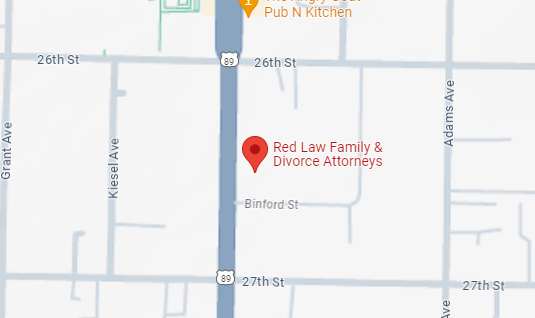
Red Law Family & Divorce Attorneys represents both petitioners seeking a modification and respondents answering one. Our primary office is located in North Ogden, close to the Second District Court where these post-decree matters are heard. Call (801) 477-0733 to schedule an initial case evaluation.
Modification cases turn on proof, not on how strongly a parent feels about the current arrangement. The court needs evidence that circumstances shifted and that different terms would serve the child.
Our team builds cases around that standard. Clients who hire us work with the following:
Every case begins with an honest look at whether the facts meet Utah’s legal threshold. When they do not yet, we say so before anyone spends money on a filing.
A modification asks the court to replace part of an existing order with new terms. It is a separate action, filed in the case that produced the original decree.
Utah courts can revisit the parts of a decree that depend on circumstances rather than on a one-time division of property. Those include:
Property division and debt allocation are final once the original decree is entered. A petition to modify cannot be used to re-litigate property division. Resolving property disputes requires an appeal or a motion for relief under strict procedural deadlines. Our attorneys review your existing decree first to confirm which provisions remain open to modification.


Each type of order carries its own threshold. Meeting the standard for one does not automatically satisfy another.
Under Utah Code Section 81-9-208, a verified petition must establish that admissible evidence demonstrates a substantial and material change in circumstances affecting the child or one or both parents.
If the court modifies the order, it must enter written findings showing that:
The statute directs courts to give substantial weight to an existing joint legal or joint physical custody arrangement when the child is thriving, happy, and well-adjusted. Maintaining stability carries significant weight in these proceedings.
Utah Code Section 81-6-212 sets two paths, and which one applies depends on how long the current order has been in place:
The statute lists the kinds of changes that may qualify as substantial:
Under Utah Code Section 81-4-504, a court may modify alimony only upon showing a substantial material change in circumstances that was not expressly stated in the original decree or findings of fact.
Most petitions stem from an ordinary life change that proved permanent. Frequent triggers include:
Under Utah Code Section 81-9-209, a parent planning to move 150 miles or more from the other parent must provide at least 60 days of advance written notice. Relocations involving joint physical custody arrangements require filing a petition to modify, along with the notice.



The steps below reflect the process described by the Utah Courts self-help resources on modifying a decree:
Temporary orders are sometimes available while a petition is pending. Whether that makes sense depends on how urgent the change is and what the current order already provides.
Being served with a petition to modify requires immediate action. The response deadline is strict, and failing to respond within the allowed 21-day window can result in a default judgment, which would enter the petitioner's proposed terms without your input.
Options for a responding party include:
Bring served paperwork to an attorney immediately to ensure your rights and arguments are preserved.
A modification is not the only remedy when a parent stops following the current schedule. Utah Code Section 81-9-208 also addresses noncompliance with a parent-time order.
If the court finds that a parent failed to provide court-ordered parent-time, it may award the prevailing party attorney fees, costs resulting from the failure, and other appropriate equitable relief. The court is also directed to award reasonable make-up parent-time unless doing so would not be in the child’s best interest.
Documentation matters in these cases. Our attorneys help clients assemble messages, calendars, and exchange records that show what actually happened over time.
Utah law does not maintain an exhaustive list. For custody, the change must significantly impact the child or a parent, and the court must find that new terms directly benefit the child. Minor friction between co-parents does not meet this threshold. Permanent changes to income, work schedules, health, or child development needs are standard examples.
No. While parents can agree on informal changes, those agreements are legally unenforceable until signed by a judge. Until a modified order is formally executed by the court, the original decree remains the only legally binding document.
For custody and parent-time, there is no mandatory waiting period if a substantial material change in circumstances has occurred. For child support, filing within three years of the original order requires showing a stricter 15% deviation from statutory guidelines rather than the standard 10%.
Yes, though the standard is stricter. A parent must show a substantial change in circumstances, a difference of 15% or more between the current amount and the guideline amount, and that the difference cannot be temporary.
A brief layoff or one slow month usually will not be enough. A 30% or greater change in income is among the factors the statute identifies.
Alimony terminates automatically upon the payee’s remarriage or death. If cohabitation is proven in court, the judge is required by statute to terminate the alimony order.
Under Utah Code Section 81-9-209, a parent planning to move 150 miles or more from the other parent must provide at least 60 days of advance written notice. Relocations involving joint physical custody arrangements, defined as each parent having at least 111 overnights annually, require filing a petition to modify alongside this notice. Proceeding with a move without fulfilling these statutory notification requirements can significantly damage your legal standing in future custody proceedings.

An order that fit your family three years ago may not fit it now. Circumstances may have changed in a lasting way, or a petition may have arrived that requires a response before the deadline passes. Our North Ogden modification-of-orders lawyer can review the current order and explain the options available under Utah law.
Red Law Family & Divorce Attorneys serves families in North Ogden, Ogden, and communities throughout Weber County. Founding attorney Trevor Osborn and our team handle post-decree matters from the first filing through resolution.
Call (801) 477-0733 to schedule an initial case evaluation.
"*" indicates required fields


Aggressive Representation: Our aggressive approach in the courtroom and in negotiations ensures that we obtain the best possible outcomes in every case.
"*" indicates required fields