Family law matters can be complicated, and this includes divorce. With issues like child custody, child support, and property division at the center of the equation, you need professional legal services that put your needs first.
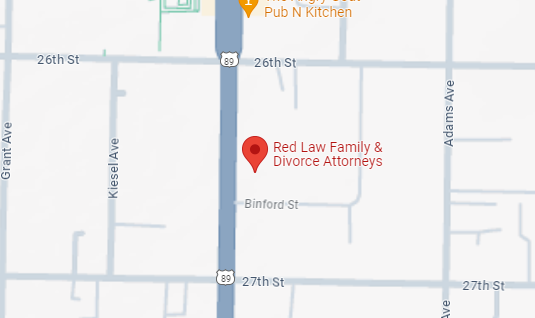
At Red Law Family & Divorce Attorneys, our Ogden divorce planning lawyer can help you with any family law matter you might have. Learn more about divorce planning below. Then, contact us to schedule your initial consultation.

We will do whatever is necessary to achieve a fair result as you and your spouse divide the property. This often requires us to subpoena records, use certain tools called interrogatories, request production and admission requests, perform an investigation, and depose witnesses.
That may sound extensive, but going through this process thoroughly and strategically can save you thousands, tens of thousands, and sometimes hundreds of thousands of dollars in marital assets. We have the experience and ability to carry you through this process successfully.
However, we also have the skills to negotiate a fair settlement of your case so your divorce can conclude quickly if your spouse is willing and reasonable.
There are specific assets that are commonly divided in a divorce. They include:
If divorcing individuals cannot agree on who should receive the home, the court may do one of several things:
Real property refers to land, homes, condominiums, and other structures attached to land. If the divorcing individuals cannot agree on who should receive the real property, a court may:
Suppose only one of the divorcing individuals has a retirement or pension plan. In that case, the other individual is typically entitled to half of the amount generated during the marriage (i.e., if the marriage lasted ten years, the retirement accrued during those 10 years will be divided, but anything accrued before the marriage will not be divided).
Suppose both individuals have retirement or pension plans. In that case, the court could either:
A special document called a "Qualified Domestic Relations Order" needs to be prepared whenever a retirement account is to be divided.
Personal property includes anything movable, such as cars, clothes, furniture, etc. Courts in Utah divide personal property equitably (fairly). Most judges do not like to deal with individual items of personal property.
To avoid dealing with parties disputing over personal property items, some judges simply order that everything be sold (perhaps at a yard sale or an auction), and the parties divide what money is left over.
Other times, a judge may order that one party draft two lists of personal property and then let the other party choose which list they want. The court's goal is to ensure personal property is divided fairly.

If a divorcing couple cannot agree on how to split their marital assets, a court will decide for them. Three basic rules will help you understand how your assets will be split in a divorce:
We'll discuss each of these three rules in more detail below.
Courts will use an "equitable" approach to dividing property between spouses in a Utah divorce. This means that the courts, above all, want the property to be divided fairly.
An equitable property division between spouses doesn't necessarily mean that each spouse will receive 50% of the couple's assets—although that also occurs.
Courts will not only consider the monetary value of the couple's assets, but they will also consider all of the circumstances of the divorce and the circumstances of the individual spouses.
For example, a court may find it is equitable for the parent who will have physical custody of the children to be awarded the couple's home or that the spouse who owns and operates his/her own business be awarded sole ownership of that business.
Marital property is property acquired or earned during the marriage, so long as the property is not acquired by gift or inheritance. Anything not classified under "separate property" (see below) will be considered marital property.
Three main categories of property will not be split and distributed between spouses upon divorce:
These are simplified versions of the rules. As is often the case with law, caveats and additional explanations are needed based on the specific facts of a case.


Legal separation allows spouses to live apart and make formal arrangements without ending the marriage. Divorce legally dissolves the marriage, allowing both parties to remarry if they choose.
The divorce process in Utah typically takes at least 90 days. However, the duration can vary based on factors like court schedules and the issues' complexity.
No, one attorney cannot represent both spouses due to a conflict of interest. Each party should have their attorney to ensure their rights are protected.
Utah follows equitable distribution, meaning property is divided fairly but not necessarily equally. The court considers various factors to determine a fair division.
You may not need to appear in court if you and your spouse agree on all terms. Your attorney can help you file the necessary paperwork for an uncontested divorce.

At Red Law Family & Divorce Attorneys, we put our clients first. We have extensive experience working through property disputes, assessing the value of marital assets, and aggressively pursuing favorable results for our clients.
Our Utah law office can even help you with post-divorce modifications. Contact our Ogden divorce planning lawyer today for your initial consultation.
"*" indicates required fields


Aggressive Representation: Our aggressive approach in the courtroom and in negotiations ensures that we obtain the best possible outcomes in every case.
"*" indicates required fields