Legal grounds for divorce are the reasons the law requires to end a marriage. To file a petition for divorce in Utah, you must name one of ten legal reasons. Most people choose no-fault grounds, but others pick fault-based grounds if a spouse did something wrong. Red Law Family & Divorce Attorneys knows that picking the right path is a big choice for your future. Your choice of ground for divorce in Utah may significantly affect your case.
Grounds for divorce are the legal reasons you give the court to prove the marriage should end. A judge cannot sign a decree of divorce unless you have a valid legal reason. This means you are meeting state rules to change your legal status from married to single.
The rules for these reasons are set forth in Utah Code § 81-4-405. This law lists the ten reasons a court can use to end a marriage contract. Knowing these laws helps ensure your petition for divorce is correct from the start.
Every divorce case in Ogden must follow these specific state laws. These rules apply to both an uncontested divorce and a contested case. Following the Utah Code helps protect your legal rights during the whole process.
Most couples in Utah choose a no-fault divorce because it is often faster and less stressful. This path allows you to end a marriage without having to prove that one person did something wrong. It focuses on the fact that the marriage is over rather than blaming a specific spouse for the split.
The most common ground for divorce is irreconcilable differences, as listed in Utah Code § 81-4-405(1)(h). This means you and your spouse have serious marital problems that cannot be fixed. You do not need to share private details about your fights or personal issues with the court. Choosing this ground often leads to an uncontested divorce, where both parties agree on how to move forward.
Another no-fault option is to live apart for a long time. Under Utah Code § 81-4-405(1)(j), a court can grant a divorce if you have lived separately for three years in a row. This must happen under a specific court order for separate maintenance from any state. During this time, there must be no cohabitation, meaning you did not live together as a married couple at all.
| Divorce Type | Main Requirement | Key Benefit |
| Irreconcilable Differences | Must state the marriage is broken and cannot be saved. | Fast process; keeps personal details private. |
| Living Apart (3 Years) | Must have a court order and live apart for 36 months. | Useful when a legal separation is already in place. |
Choosing a no-fault path helps many families reach a divorce decree with less conflict. It allows both parties to focus on important goals, such as child support and property division. By avoiding a long court battle over who is at fault, you can save both time and money.
While most people choose the no-fault path, some cases involve specific misconduct. In these situations, you may decide to file for a divorce based on fault grounds. Proving fault can be difficult, but it may have strategic implications for how the court handles your final decree.
Choosing fault grounds means you are accusing your spouse of specific bad behavior that caused the marriage to end. Under Utah Code § 81-4-405, there are eight fault-based reasons you can use. To succeed, you must provide enough evidence to prove these claims in a contested divorce.
Adultery occurs when a spouse has voluntary sexual relations with someone else while married (Utah Code § 81-4-405(1)(b)). This is one of the most common reasons people seek a fault-based split. Evidence of an affair can sometimes influence a judge’s decision regarding Utah spousal support.
This ground applies if your spouse left you for more than one year without a good reason (Utah Code § 81-4-405(1)(c)). This is known as willful desertion. It shows the court that one person abandoned their duties to the marriage and the home.
A spouse has a legal duty to provide for the family's basic needs. If they have the ability to help but refuse to provide food, clothing, or shelter, it is considered willful neglect (Utah Code § 81-4-405(1)(d)). This can be a factor if one person was left with no financial support.
If a spouse is frequently under the influence of alcohol or drugs, you can cite habitual drunkenness (Utah Code § 81-4-405(1)(e)). This behavior must be a regular habit that interferes with the marriage. Courts take this seriously, especially when deciding matters like child safety and visitation.
You can file for divorce if your spouse is convicted of a felony (Utah Code § 81-4-405(1)(f)). This ground focuses on the legal and social impact of a serious crime on the family unit. A felony conviction can also change how a court views a parent's fitness in a custody battle.
This is a rare ground used when a spouse has a severe mental condition that cannot be treated (Utah Code § 81-4-405(1)(i)). The law requires strict proof, including testimony from medical experts. You must show that the person was legally declared insane before the case started.
This ground covers physical abuse and severe emotional harm (Utah Code § 81-4-405(1)(g)). If a spouse’s cruel treatment causes bodily injury or intense mental distress, it is a valid reason for divorce. In these cases, the court is also likely to issue a restraining order for protection.
Utah law allows for a divorce if a spouse was impotent at the time of the marriage and the condition cannot be cured (Utah Code § 81-4-405(1)(a)). This is a very private matter that is rarely cited in modern cases. Most couples facing this issue choose irreconcilable differences to keep the details out of public court records.
Evidence for fault grounds:
Using fault grounds can make a case much more complex and emotional. It often moves a simple case into a battle over marital property and future payments. You should think carefully about the benefits before making these claims in public court filings.
Deciding between fault and no-fault grounds is a key step in the Utah divorce process. Most people pick no-fault grounds to keep the case simple and lower the emotional toll. However, in some cases, proving a specific fault can change the final outcome of the divorce decree. Red Law Family & Divorce Attorneys can help you weigh these options to find the best path for your future.
Under Utah Code § 81-4-502(2), a judge can look at fault when deciding on Utah spousal support. If one spouse committed adultery or caused the marriage to fail through bad conduct, it might change how much alimony is paid. The court looks at whether the fault substantially contributed to the breakup. This is one of the few times when proving a spouse's mistakes can result in a financial benefit for the other party.
Utah law requires an equitable division of all marital property, meaning the split must be fair but not necessarily equal. While fault usually does not change how a judge divides a house or bank accounts, there are exceptions. If a spouse spent a lot of money on an affair or a drug habit, the court may count that as waste. In these cases, the other spouse might get a larger share of the remaining real property or personal property to make up for the loss.
When judges decide on custody, they focus on the best interests of the child under Utah Code § 30-3-10 (and related Title 81 provisions). Fault grounds like habitual drunkenness or a felony conviction can directly show that a parent may not be fit to care for a child. A history of cruelty that led to a restraining order is also a major factor. The court uses these facts to decide on child support and where the child will live.
Choosing a fault divorce is almost always more expensive than an uncontested divorce. You will need to spend more on legal fees to gather evidence, such as court records or expert testimony. It also adds a lot of stress to the family, especially if children are involved. The process often takes much longer because every claim of fault must be proven in a contested divorce hearing.
Before filing, you must decide if the potential gain is worth the extra work. For many, the speed of a no-fault divorce is better for their mental health and wallet. Others feel they must prove fault to protect their children or ensure they receive fair Utah spousal support. Every situation is unique, and your choice will set the tone for your entire legal journey.
Before a judge can sign your final decree, you must meet specific state requirements. These rules ensure that the court has the power to hear your case and that both parties have a chance to respond. Missing a single step can delay your case or result in the dismissal of your petition.
To file for divorce in Utah, you or your spouse must live in a single Utah county for at least 90 days right before you file (Utah Code § 81-4-402(1)). This is known as being a bona fide resident. If you have minor children, the child must usually live in Utah with a parent for at least six months for the court to make custody orders. These Utah residency requirements are strict and must be proven to the court.
Utah law requires a 30-day waiting period between the day you file your petition for divorce and the day the judge signs the final decree (Utah Code § 81-4-402(3)). This time is meant to give couples a final chance to think about their decision. In rare cases, you can ask the court to waive this wait if you show extraordinary circumstances. Most couples use this time to finish mandatory divorce education classes if they have children.
The legal journey follows a set path through the court system to ensure fairness for everyone involved. While every case is different, most follow these core steps:
Meeting these requirements is the first hurdle in any case. Whether you are seeking an uncontested divorce or preparing for a trial, following these steps correctly is vital. Red Law Family & Divorce Attorneys helps clients stay on track with these timelines to avoid unnecessary delays.
While divorce is the most common way to end a marriage, it is not the only legal option in Utah. Some couples choose different paths based on their religious beliefs, financial needs, or the specific facts of their relationship. Each process has its own set of rules and impacts your legal status in a different way.
An annulment is a court order that treats a marriage as if it never happened. Unlike a divorce, which ends a valid marriage, an annulment is for marriages that were never legal from the start. Under Utah Code § 30-1-17.1, reasons for an annulment include bigamy, marriage between close relatives, or if one person was under the legal age. Proving these facts can be difficult and often requires more evidence than a simple no-fault divorce.
Legal separation, also known as separate maintenance in Utah, allows a couple to live apart while staying legally married. Under Utah Code § 81-4-101, the court can issue orders for child support, Utah spousal support, and the use of marital property. This is often a good choice for those who cannot divorce for religious reasons or who need to keep shared health insurance. It provides the structure of a divorce decree without officially ending the marriage contract.
Utah recognizes one no-fault ground (irreconcilable differences) and nine fault-based grounds, including adultery, desertion, and felony conviction. Most couples choose no-fault grounds to simplify the legal process.
There is a mandatory 30-day waiting period after filing. An uncontested divorce may finish shortly after, while a contested case involving property or children can take several months.
No. You can file for a no-fault divorce by stating there are irreconcilable differences. This means you do not have to prove your spouse did anything wrong.
You or your spouse must live in a single Utah county for at least 90 days before filing. Additional requirements apply if you have minor children.
Yes. Under Utah law, a judge may consider fault when determining spousal support. Conduct that contributed to the marriage's end can influence the final alimony amount.
If there are contested issues, Utah courts usually require at least one mediation session. This helps couples resolve property and child custody disputes without a trial.
Ending a marriage is a major life event that can change your finances and family structure. The decisions you make during this time will affect your life for many years to come. Having professional guidance ensures that you do not miss critical steps or lose out on your fair share of assets.
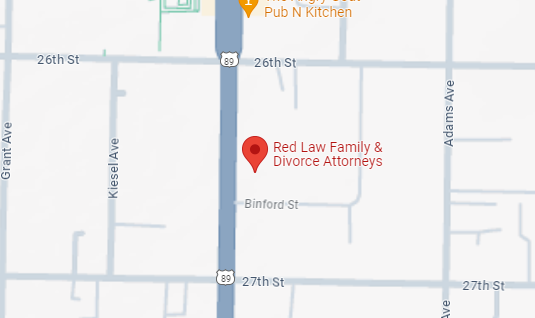
Red Law Family & Divorce Attorneys serves clients in Ogden and across Northern Utah. Our team focuses on clear communication and strong advocacy to help you reach a fair divorce decree. We understand the local court system and the updated statutes in the Utah Code.
If you are ready to move forward, we are here to provide the support you need. We help families find a path toward a stable and secure future. Contact us today to learn how we can assist with your specific case.
"*" indicates required fields


Aggressive Representation: Our aggressive approach in the courtroom and in negotiations ensures that we obtain the best possible outcomes in every case.
"*" indicates required fields